Static Electricity in the Chemical Industry
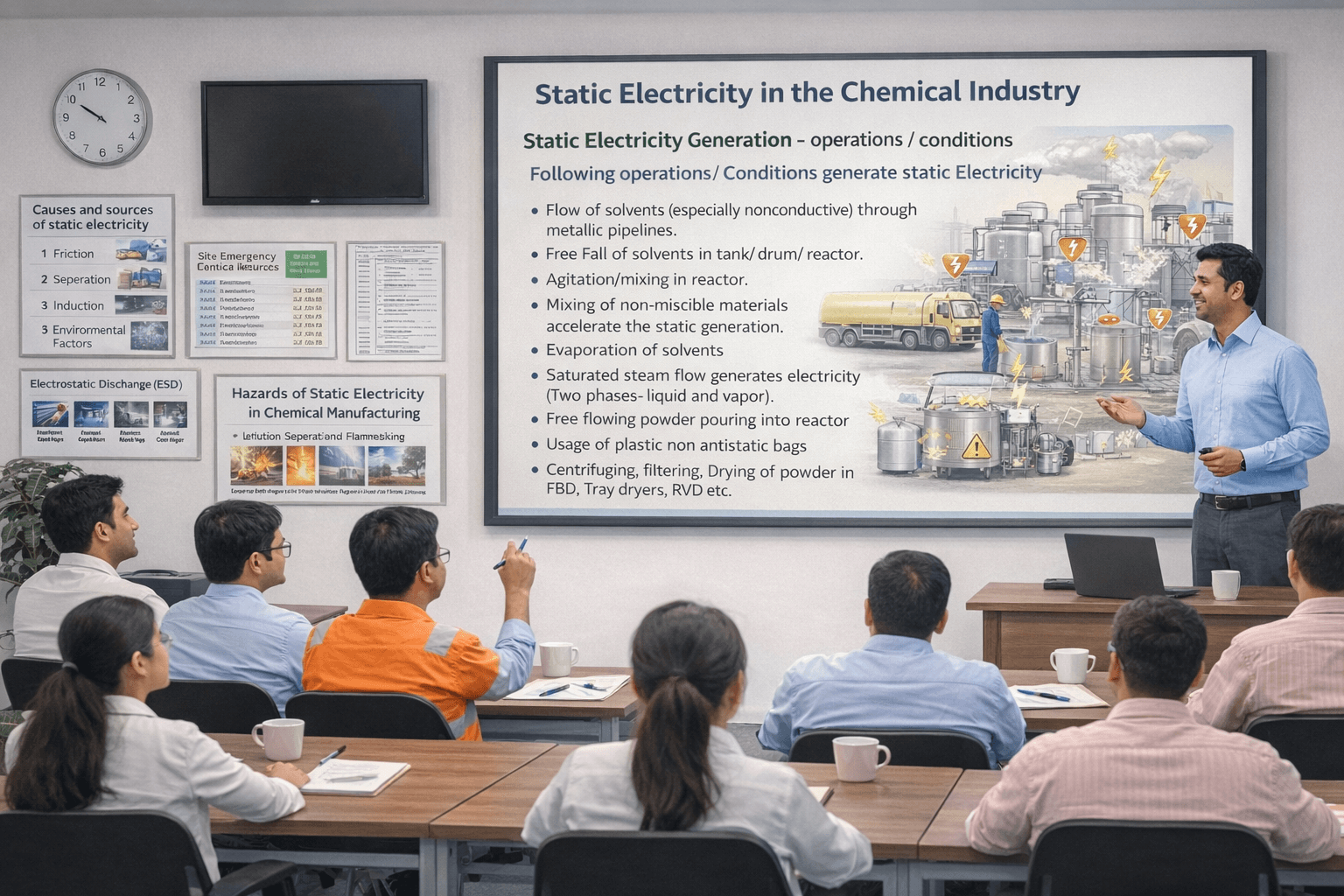
Static electricity is an often underestimated but highly critical hazard in chemical manufacturing and processing facilities. Under certain conditions, static charge accumulation and sudden discharge can ignite flammable vapours, gases, or dusts, leading to fires, explosions, and catastrophic incidents. Many serious chemical industry accidents have been traced to poor understanding of static charge generation, inadequate bonding and earthing, unsafe work practices, and lack of awareness during routine operations such as filling, transfer, mixing, and maintenance. This training provides a structured understanding of the science of static electricity, its risks in chemical plant operations, and the practical measures required to control and mitigate static-related hazards.
👉 Need customized training for your workforce?
Benefits to Participants
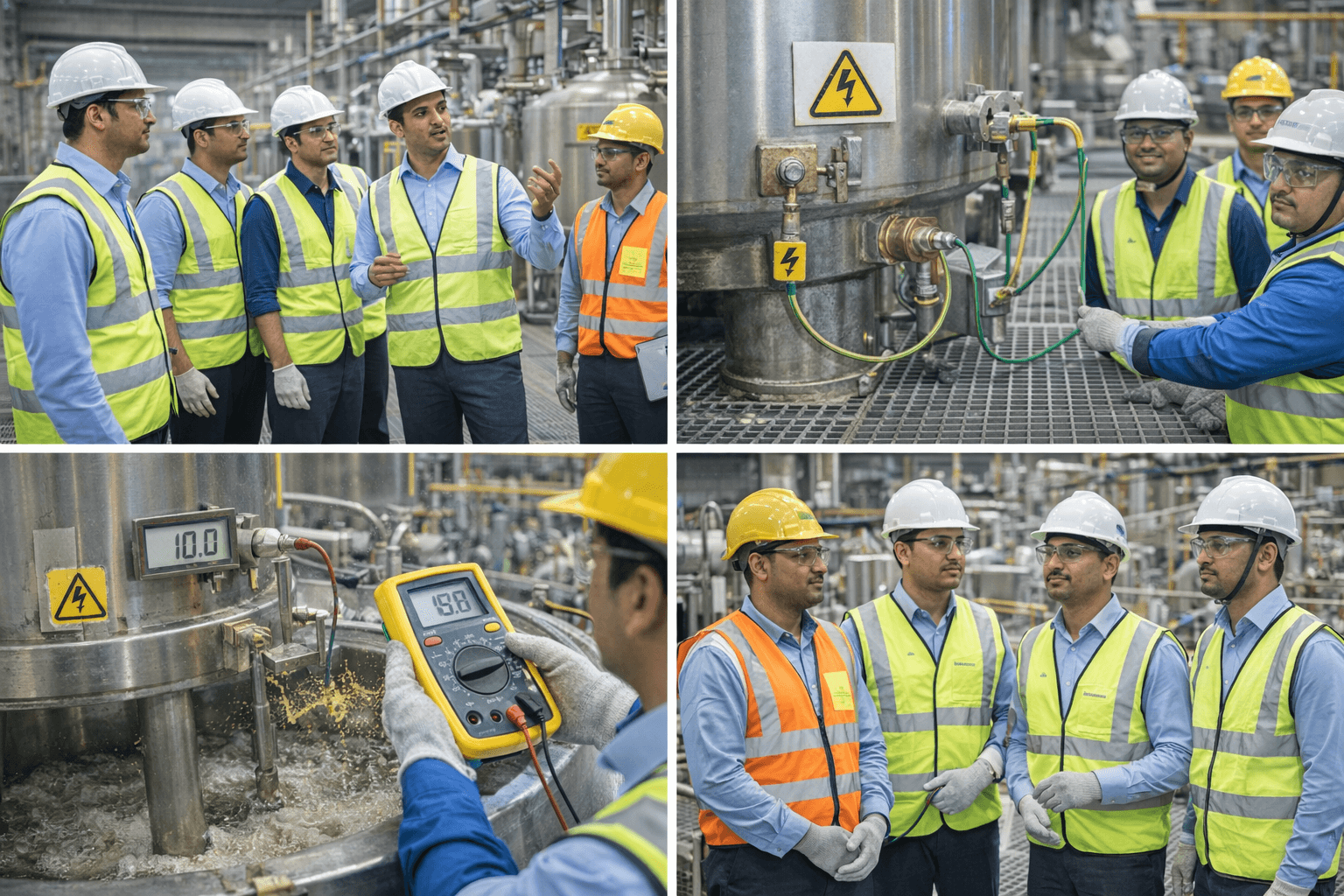
Participants gain a clear understanding of how static electricity is generated, accumulated, and discharged during chemical operations. The training enhances their ability to identify static-related hazards, assess risks, and apply effective control measures including engineering controls, bonding and earthing practices, safe operating procedures, and appropriate PPE. Through real-life case studies and incident analysis, participants develop improved hazard awareness and safer work behaviours. The program also strengthens emergency response readiness, helping participants act correctly during static-related incidents and prevent escalation into fires or explosions.
Target Audience
- Chemical plant operators and technicians
- Process engineers and maintenance personnel
- EHS personnel
- Production and operations supervisors
- Tanker loading/unloading and bulk transfer personnel
- Warehouse and storage staff handling flammable chemicals
- Contractors involved in chemical handling, maintenance, or shutdown activities
- Project managers and permit-to-work authorities
Training Methodology
- Instructor-led classroom training / Online
- Pre-test
- Knowledge Check MCQs
- Case studies
- Post Test
Training Duration - 16 Hours (Standard)
(Can be customised based on client needs.)
All Rights Reserved | LSEHS